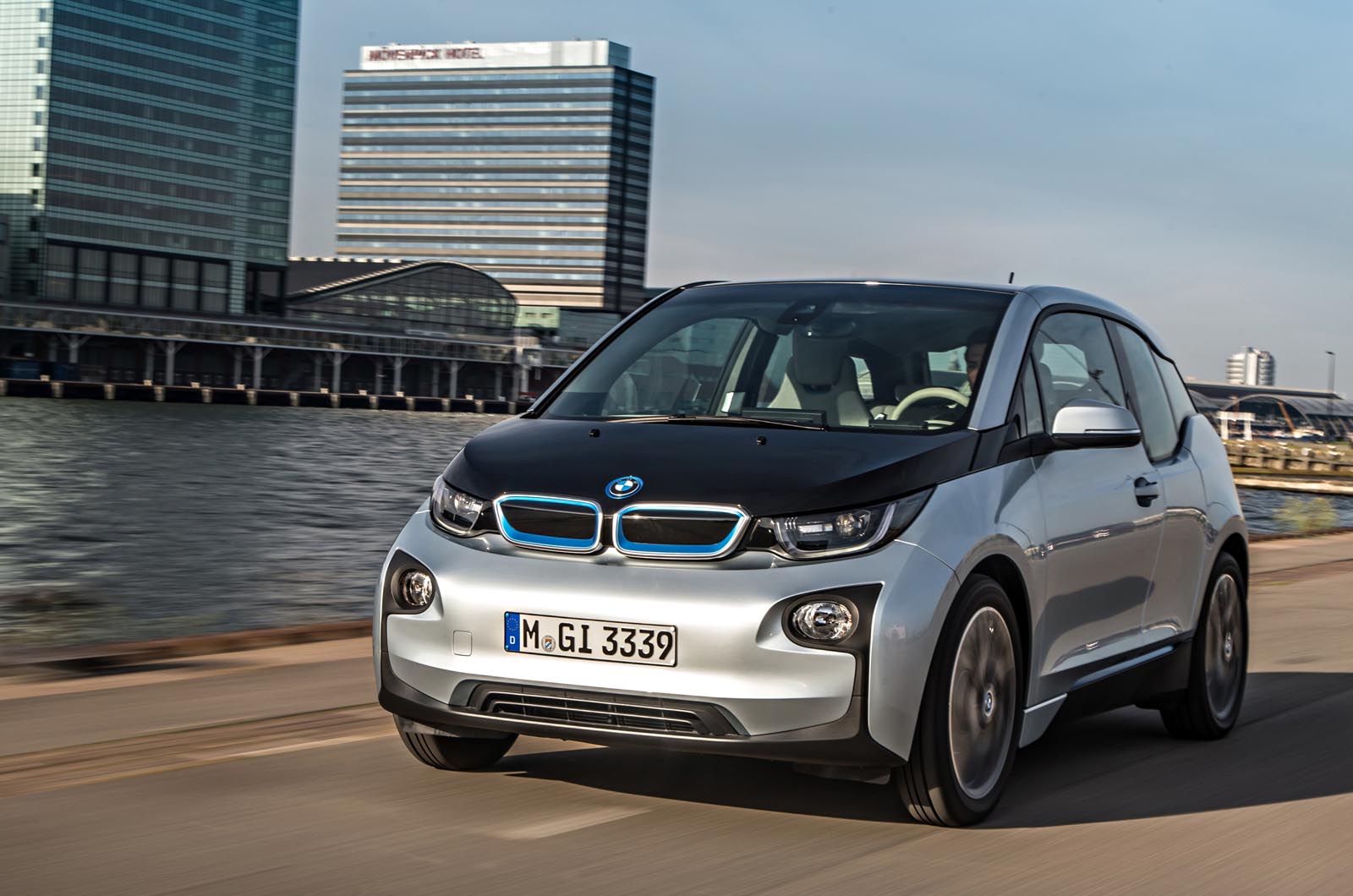
Developed at a reported cost of over £2 billion, the i3 is also significant in that it forgoes front-wheel drive in favour of rear-wheel drive, just like BMW’s traditional combustion-engine models. The promise? An entertaining driving experience quite unlike any other series-production existing electric car.
On top of this, the i3 offers an impressive range of app-based services that allow you to network the car with various mobility solutions – including public transport networks – in a move aimed at easing transport requirements.
So, as well as appealing to the head, BMW hopes its first i branded model, which grew from an internal project known under the codename Mega City Vehicle, will also appeal to the heart. And in doing so, garner broader appeal than any battery-touting rival. Young, old, singles, family car buyers, environmentally conscious, enthusiast drivers, technology obsessed – BMW says it has attempted to appeal to all tastes and requirements.
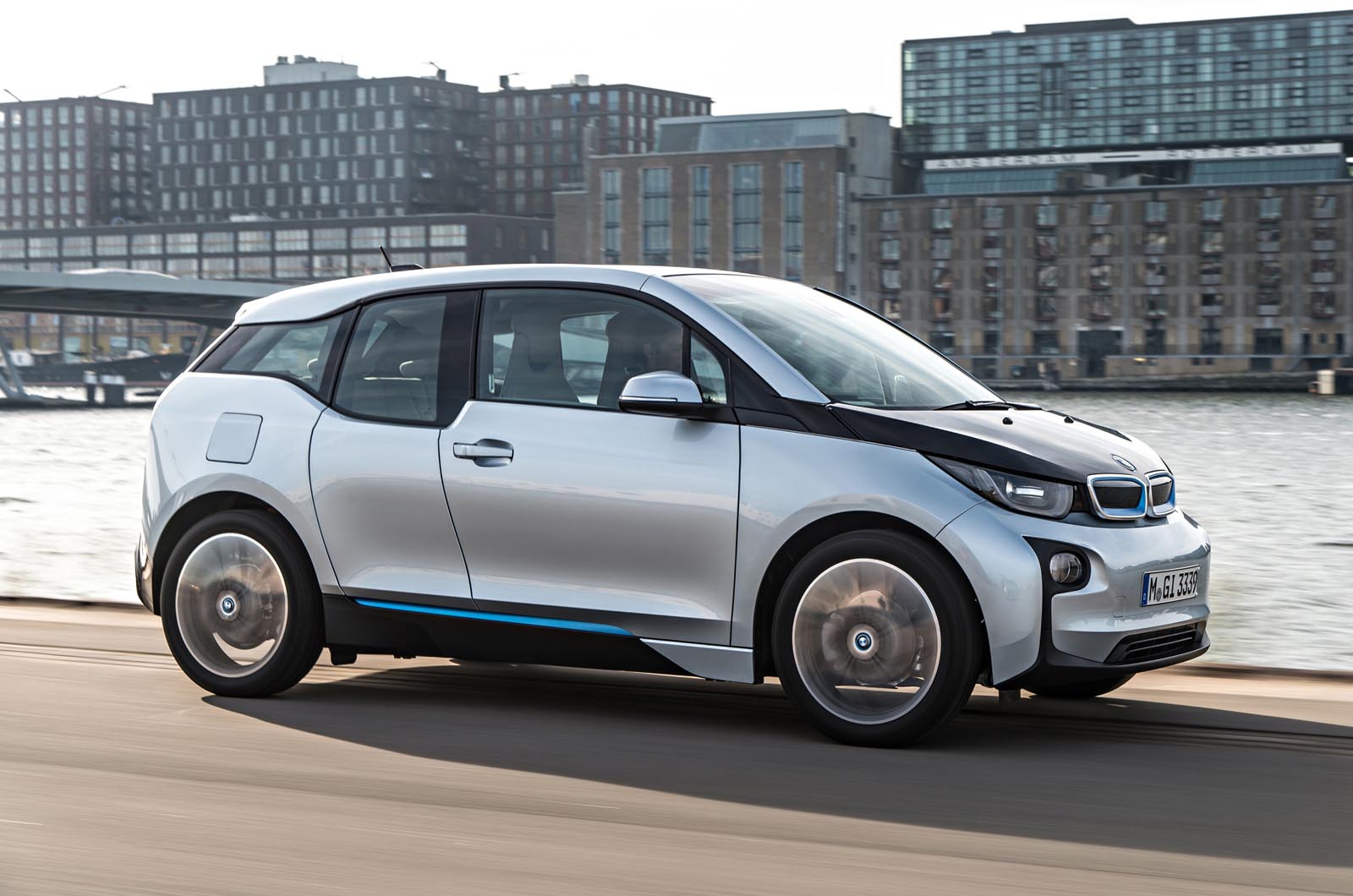
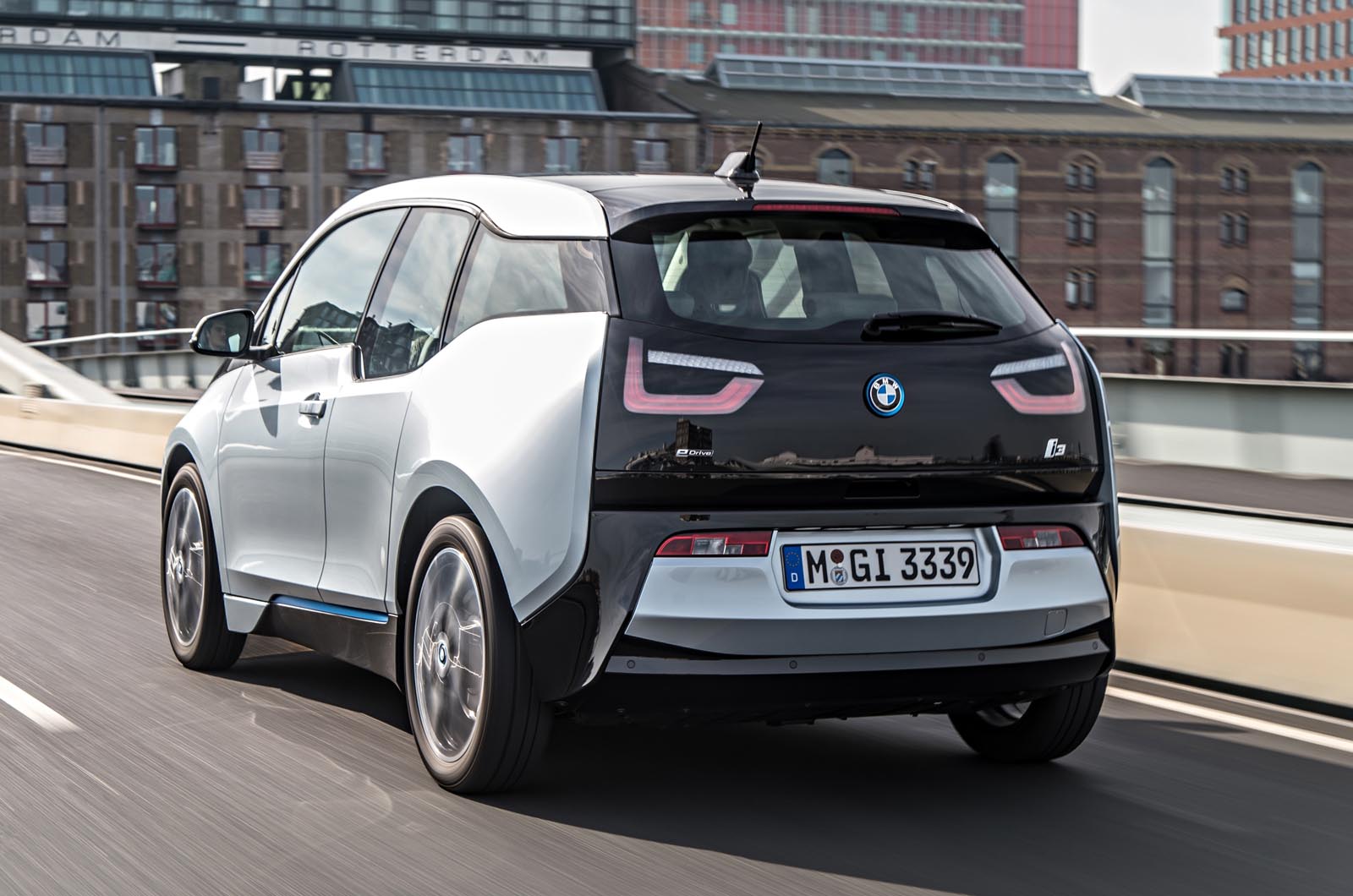
For starters, the i3 looks very futuristic, with a concept car mimicking appearance quite unlike any other BMW model past or present. The form language is unique; the only real giveaway to its BMW roots being the kidney-shaped grille and the blue-and-white roundels it wears front and rear. It is relatively compact, running to 3999mm in length, 1775mm in width and 1578mm in height. However, the inclusion of 19-inch wheels shod with low rolling resistance 155/40 profile tyres as standard tend to make it appear bigger than what it really is.
What is it like?
The silhouette suggests mini-MPV, and this is fully reflected inside with upright seating for five at a pinch. The contemporary looks continue within the styling of the steering wheel, dashboard and high-resolution displays.
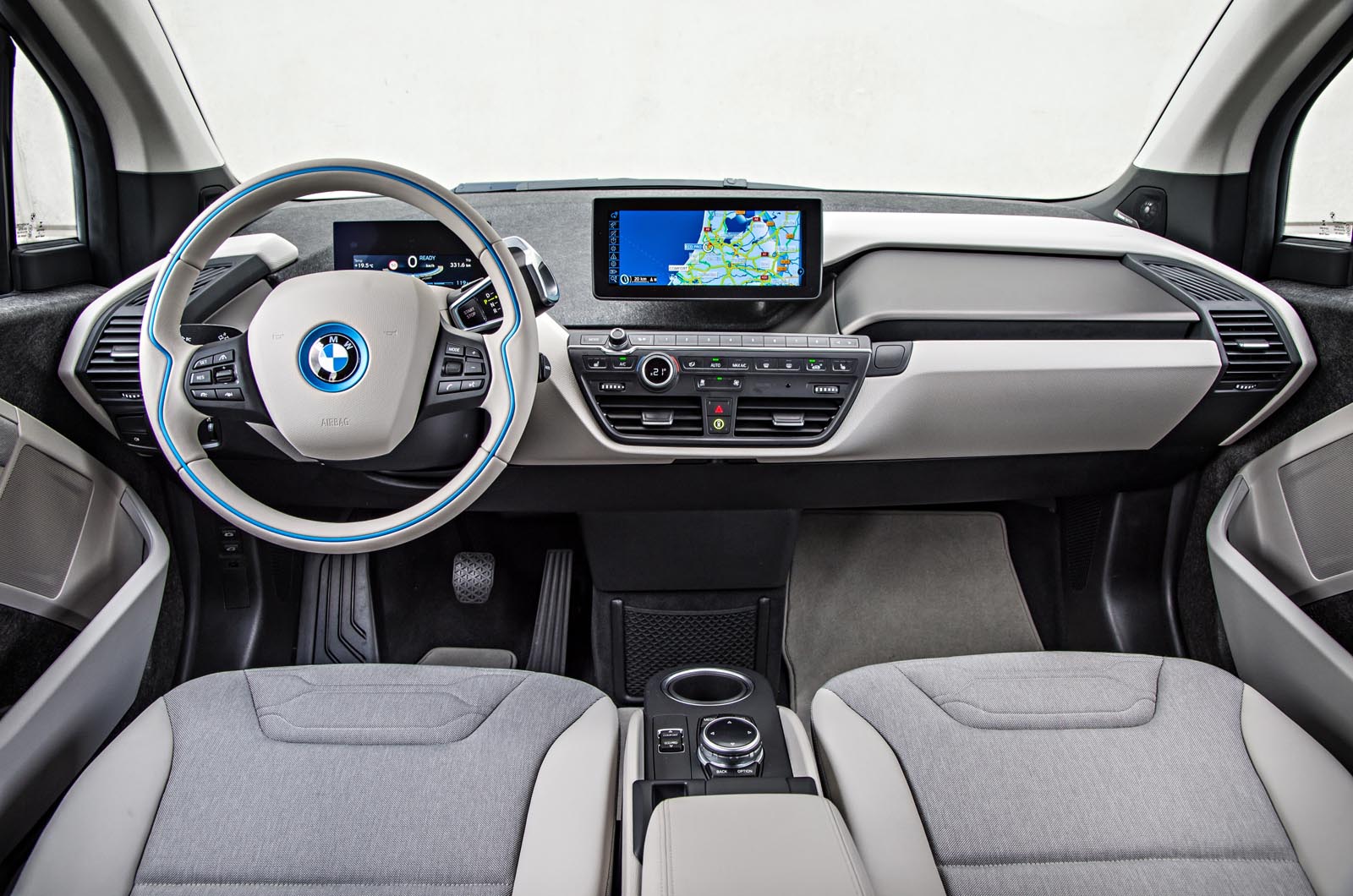
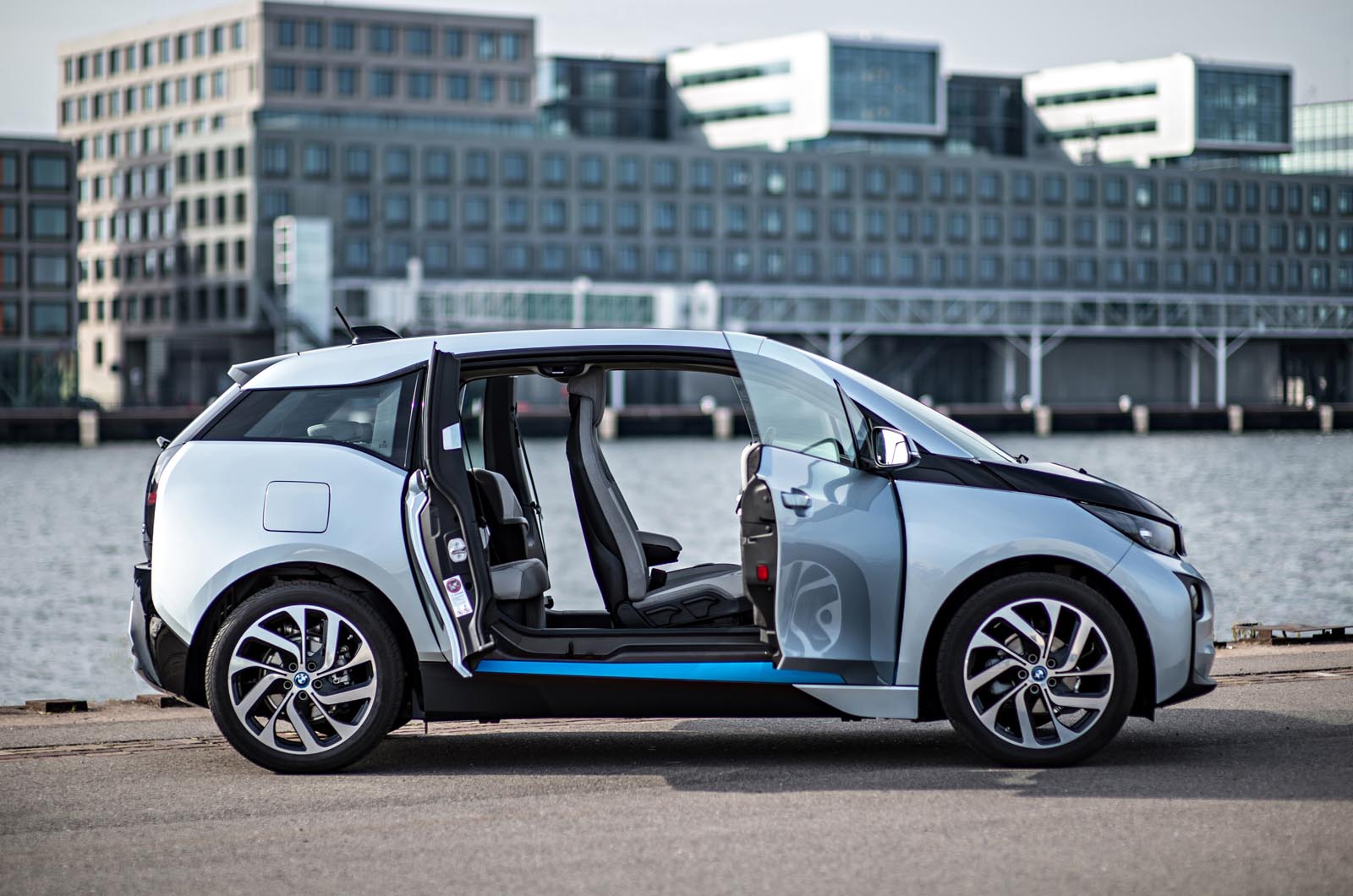
You step up into the cabin, which boasts a flat floor, underneath which sits a 230kg battery. The lithium-ion unit consists of 96 individual cells and comes with a warranty valid for up to six years or 100,000 miles. There is a commanding view from the high-mounted driver’s seat, although you look in vain for any bodywork beyond the base of the windscreen, such is the acute angle of the stubby bonnet. The view out back, meanwhile, is hampered somewhat by the substantial pillars and a shallow rear window within the tailgate. Accommodation up front is excellent, with the i3 imparting an airy and upbeat ambiance.
The decision to eschew a conventional steel monocoque in favour of a more advanced combination of aluminium, carbonfibre and steel construction for the i3 required a big investment in production infrastructure, but it has allowed BMW to bring its first dedicated electric car to market with a kerb weight that undercuts the competition at just 1195kg. By comparison, the similarly sized Nissan Leaf hits the scales at 1525kg, while the smaller Renault Zoe weighs 1390kg.
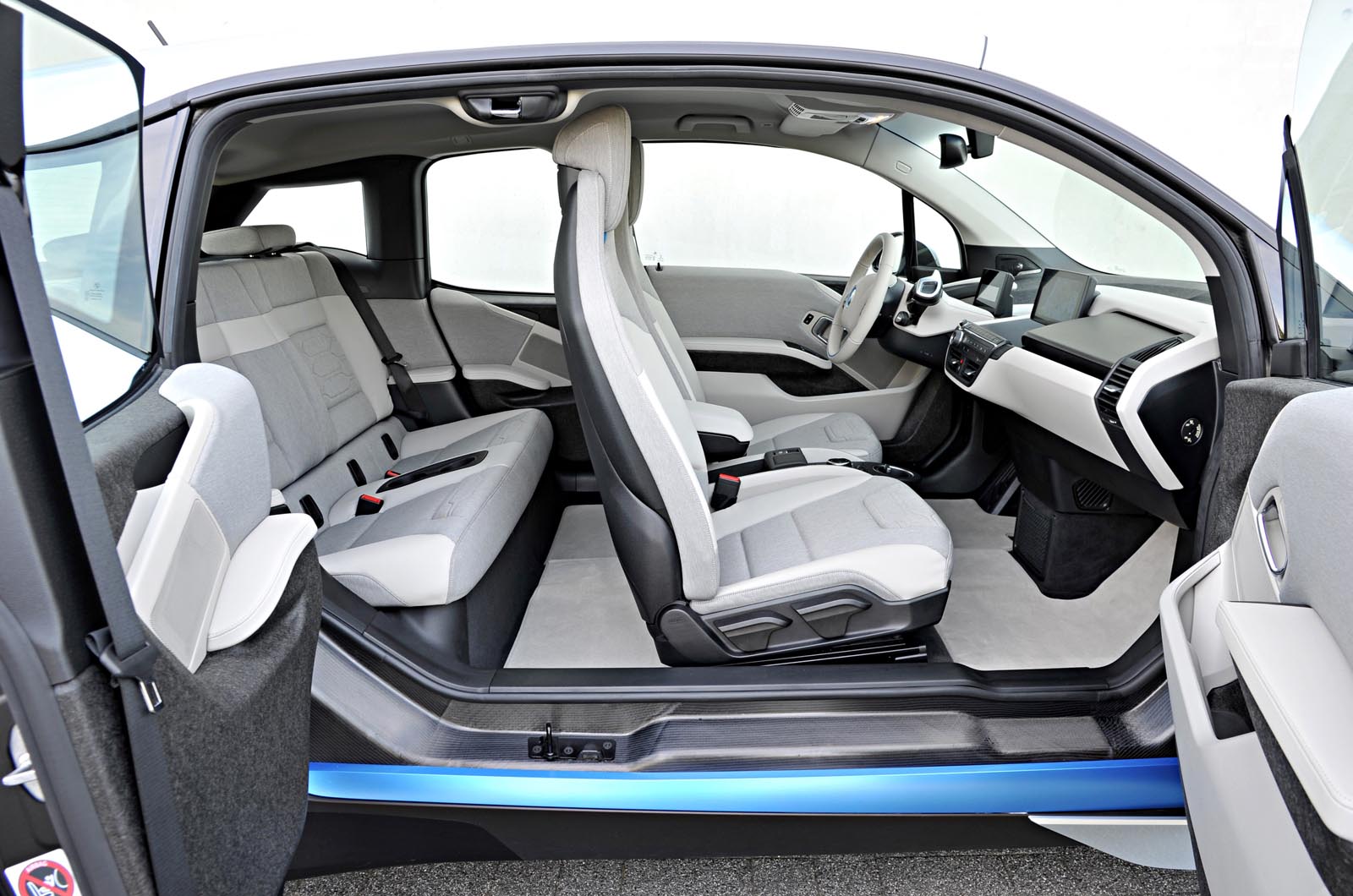
Further weight-saving measures are evident throughout; the outer body is a combination of thermoplastic panels, the windows use thinner glass than you find in the more traditional BMW models, the chassis uses largely bespoke aluminium components and selected interior trims, including the top of the dashboard, go largely untreated.
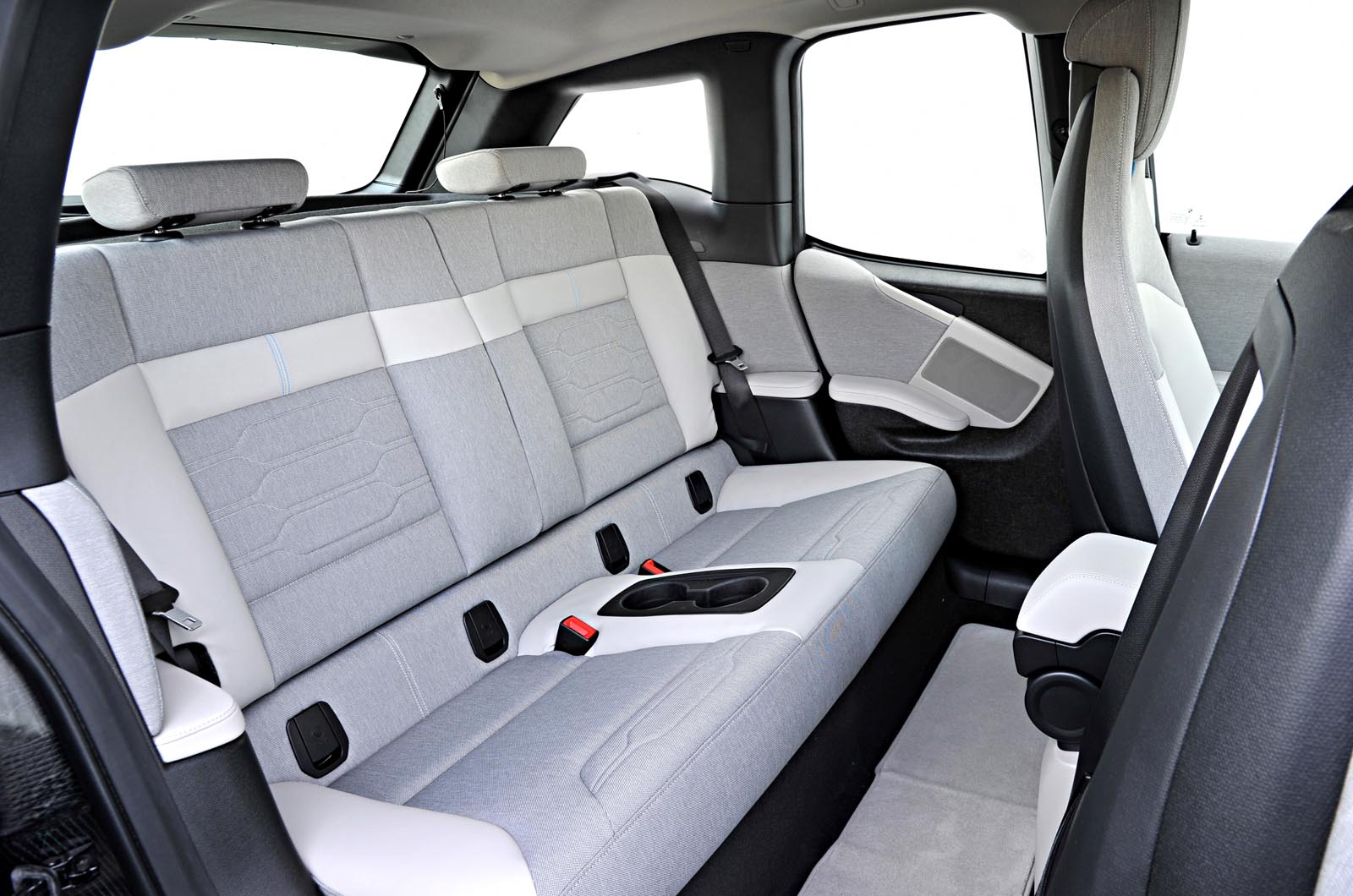
As well as being relatively light, the advanced construction used by the i3 also helps endow it with what BMW describes as class leading rigidity. This inherent structural strength has allowed designers to do away with traditional B-pillars and permit the use of coach style rear doors. It’s meant to easy entry to the rear. However, a combination of the high-mounted floor and curvature of the roof makes getting in a more difficult exercise than it would appear. The stubby rear door also boasts fixed windows.
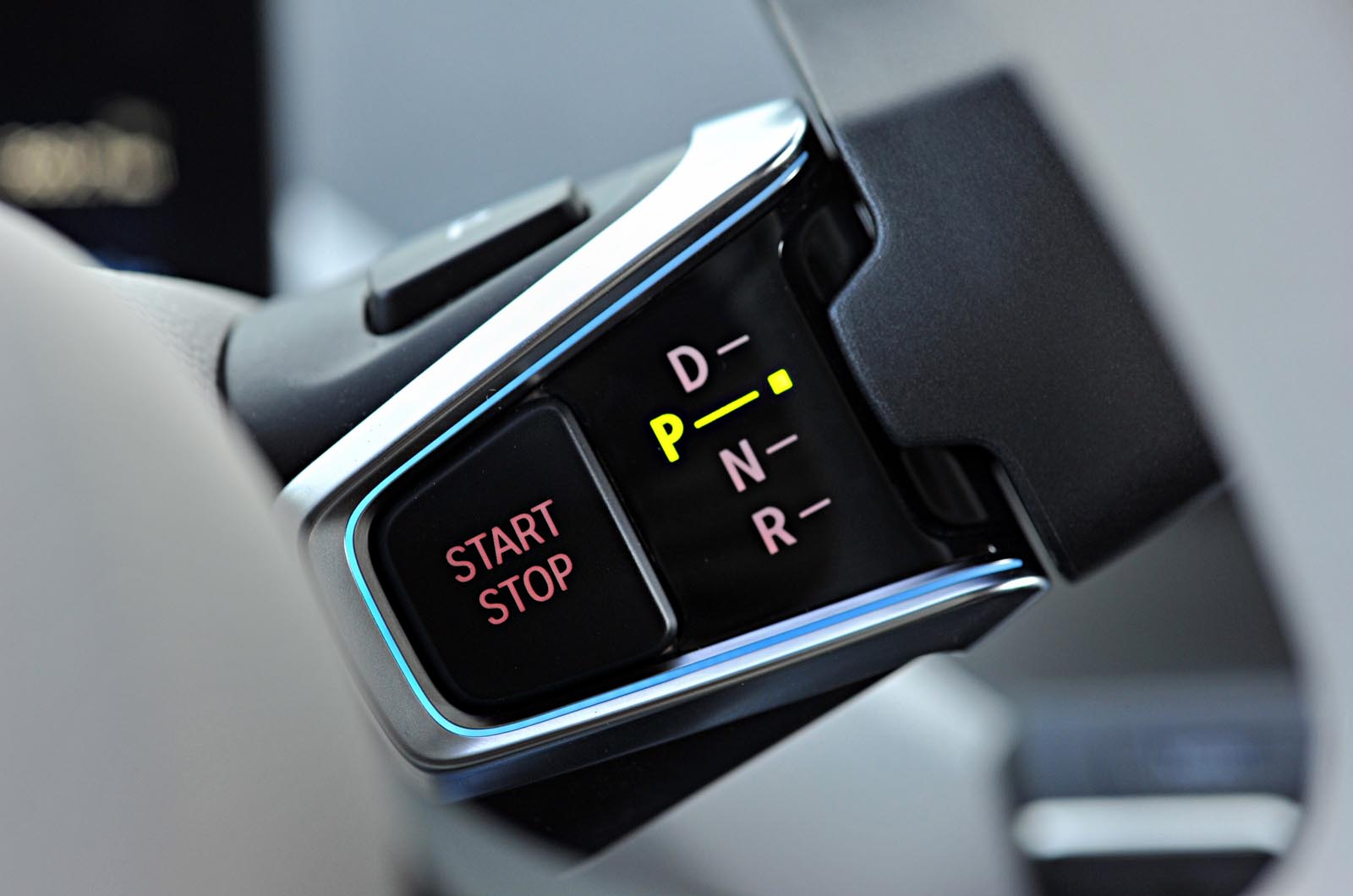
The electric motor used by the i3 is mounted within its own sub-frame, which forms part of the rear axle assembly. It is coupled to a gearbox that provides uninterrupted progress owing to the fact that it boasts just a single ratio. Drive is sent to the rear wheels with the choice of three modes: Comfort, Eco Pro and Eco Pro Plus - the latter of which acts as an energy-preserving mode by limiting top speed to 50mph, reducing the performance of the air conditioning and, in combination with the most advanced optional navigation system, provides routing on roads with favourable topography. Also on board are traditional safety features such as traction, dynamic stability and cornering brake control.
With 168bhp and 184lb ft of torque the moment you brush the throttle, the new BMW is more than merely brisk. In fact, its performance is good enough to match some big name hot hatches with 0-37mph in 3.7sec, 0-62mph in 7.2sec and a 50-75mph split of 4.9sec. Traction is excellent, even on a heavily loaded throttle away from the lights, without any hint of wheelspin or interruption from the various electronic driving aids. The nominal 93mph top speed is limited to preserve the battery charge.
The sporting impression is reinforced by relatively light and direct steering. In combination with a low centre of gravity, this endows the i3 with swift and sharp directional change response for excellent maneuverability in urban driving conditions. The electro-mechanical steering system is shared, in part, with the next generation Mini hatchback and becomes more direct as lock is wound on, although there’s sufficient response from the centre position to provide class leading levels of low speed agility. Indeed, in the cut and thrust of city traffic, the new BMW is extraordinarily agile and fun to drive.
To enhance its sportiness, BMW has provided the i3’s MacPherson strut (front) and multi-link (rear) suspension with relatively firm spring rates. The ride is quite firm and tends to become frigid on anything but smooth road surfaces. The damping, on the other hand, is relatively soft, leading to rather exaggerated levels of lean when you pitch the new BMW into a bend. The tall but narrow tyres provide relatively strong adhesion, but with so much performance on hand it doesn’t take much to get the traction and stability control systems working mid-corner.
The i3 has been configured to provide quite dramatic driveline braking the moment you step off the throttle, at which kinetic energy is fed back into the batteries.
This constantly maximises the level of energy recuperation and means you rarely need to engage the brake pedal except when you come to a complete standstill. However, the braking effect is predetermined and cannot be altered as on other recent plug-in electric cars.
There are times, especially on the open road, where a multi-stage recuperation system or even a free-wheeling coasting function would come in handy, even if it meant trading out some of the kinetic energy-producing potential, and with it ultimate range.
Should I buy one?
We’re yet to figure the i3 independently but its official consumption figures point to a real world range of up to 100 miles, or some 12 miles less than that hinted to by the standard EU mandated test.
This is well beyond the average daily commute in the UK, which BMW studies put at 30 miles, suggesting its hi-tech driveline will meet the needs of most commuters. What really impressed was its relative economy on light throttle loads at constant city speeds, at which the i3 requires little more than half its claimed average of 12.9kWh, according to its detailed energy consumption readout.
Still, there are larger issues than range that stand in the way of the i3’s quest for electric car supremacy; namely its £25,680 price tag with the government’s generous subsidy deducted being among them.
This makes BMW’s first dedicated series production electric car over £5000 more than the Nissan Leaf and a cool £10,000 more than the Renault Zoe.
But perhaps more pertinent is the fact that it is around £5000 more than the excellent 116d EfficientDynamics – the most economical of BMW’s traditional combustion engine models.
Alternatively, prospective customers can opt for a three-year leasing deal with a £2995 deposit and monthly payments of £369.
If you can live with the range, have easy access to high-voltage charging and are mostly city bound, the i3 is well worth a look. Its individual styling, contemporary feel, excellent performance, engaging agility and various connectivity solutions all hint at a bright new future for the automobile, even if it takes eight hours to charge it on a regular low voltage mains socket.
BMW i3
Price £25,680 (including £5000 Government rebate); 0-62mph 7.2 sec; Top speed 93mph; Consumption 12.9kWh/100km; CO2 0g/km; Kerbweight 1195kg; Engine synchronous electric motor; Installation rear, transverse; Power 168bhp; Torque 184lb ft; Gearbox automatic, fixed ratio; Battery/capacity lithium-ion, 22.0kwh
autocar.uk